Change in 2016

By: Kim Cobb, Director of Media Relations at Southern Methodist University, on September 9, 2016
Even at TEDxSMU, we know there are a lot of places around Dallas where you can go for conversation these days. The offerings range from the academic-oriented One-Day University programs, to the “let’s remake the city” approach of the Dallas Festival of Ideas. When TEDxSMU debuted in 2009, it was very nearly the only game in town, and it blew people away. The event grew and moved from a campus auditorium, to the Wyly Theatre, to the Dallas City Performance Hall, creating a real community of enthusiastic TEDx followers who never miss an event.
OK – so there’s competition now. But we’re changing the model, to introduce a whole new group of people to “ideas worth spreading.” Been to TEDxSMU? Not like this…
Here’s what’s different for TEDxSMU 2016, Nov. 11 + 12:
- Different venue (Deep Ellum, The Bomb Factory) different vibe
- We’ve retired the all-day, “talk-till-you-drop” Saturday format, replacing it with a casual Friday evening event, TEDxSMU: After Dark, wrapped around food, drinks, speakers and live music, plus a shortened Saturday TEDxSMU program of 12-15 speakers running from 10 a.m. to 2:30 p.m. Attend one, or attend both, according to interests and schedules.
- Krys Boyd, Krys Boyd, Kris Boyd: Dallas’ favorite conversationalist, host of KERA’s THINK program, will interview a fabulous guest at TEDxSMU: After Dark on Friday evening, Nov. 11, and then return to deliver her own TEDx talk on Saturday, Nov. 12.
We hope you will join us this year and bring a friend!
Tickets:
TEDxSMU: After Dark
TEDxSMU 2016 Illuminate
Have you ever asked yourself, “What have I gotten myself into now?”
By Linda Swindling on April 4, 2016
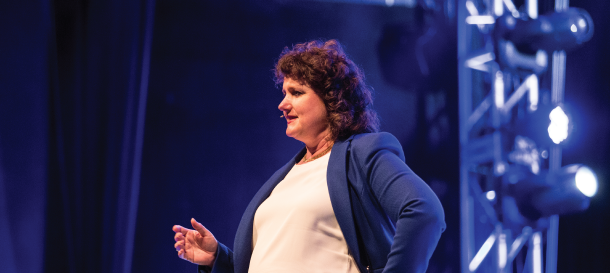
That and several other questions came to mind recently, right before I went on stage to audition for TEDxSMU. Appropriately, the title of my six minute talk was “The World Needs You to Ask Outrageously.” When I saw the format and speaker line up, my name was last.
Because I had never given such a short speech, my first thought was being last would be beneficial. I could watch the other speakers, see how they did and then be more prepared. WRONG! They were good. Their educational backgrounds and experiences are diverse and humbling. Featured in our eight speakers were college professors, a CEO, a brain injury survivor, as well as people who had experienced and overcome discrimination.
As I waited and questioned my decision to participate, I could check off many “outside my comfort zone” boxes:
_____ Calculated risk? Yes. There were judges for this program.
_____ Uncomfortable? Yep. There would be a surprise question at the end of your talk.
_____ Outrageous? Definitely. I invited people I know and respect to attend.
_____ Was there an exit I could sneak out without my family and friends noticing? Nope. Probably not.
Thanks to the support of my friends and family, I survived the experience and will move on to speak at the TEDxSMU event this fall. Since then several people have told me they want to do their own short talk. Here are some questions to ask in preparation.
What is it you want to tell the world?
Each speaker that night had a unique perspective and personal experience with a topic they felt passionate. The presenters shared stories of a brain injury, surviving discrimination, teaching children science, running a business and the importance of a diverse culture.
Can you be to the point?
If you haven’t seen them, TED and TEDx talks are much shorter than a typical speech. At six minutes, the talk was one-tenth the time of my usual hour speech. You only have a limited time. So pick the clearest point or idea you want to across. The speakers’ delivery style in this short time included reenacting a car accident, speaking in poetry/verse, telling stories and describing personal experiences.
What are the odds my topic will be selected?
Surprisingly, the topic and your experience may be more important than your delivery style. Depending on the theme of the talks, your title may fit (or not) with the subject of the speeches. My application wasn’t selected the first year. However, the topic of Asking Outrageously was a fit for this year.
Should you do it?
Of course you should. All of the speakers were approachable and authentic. And they all shared a passion to convey their message. Watch the videos of past presenters. There is coaching to help you prepare. Practice your talk to be succinct.
What’s the worst that can happen?
That was my outrageous question. I took a calculated risk and it paid off. And, know what? The world needs you to ask outrageously.
Called to be Actionists

By Monica Rodriguez on December 14, 2015
It’s not everyday that you get to sit down, relax, and listen to inspiring stories that could just possibly change your life, and the face of the planet, for the absolute better. On October 17th, 2015, that’s exactly what I did. Into the second session of the conference we go, and there – with much light and spark – comes out Tracy Brown. Brown is the president of Diversity Trends, and also an author, who is not only passionate, but also an actionist. “Not everyone needs to be an advocate, not everyone needs to be an activist, not everyone needs to be an ally,” says Brown, referring to why everyone in this country should contribute to the making of a fair, equal, and unbiased society. “We must all be actionists,” says Brown suggesting that it’s important that we all truly seek to live out the values of our country, which all equality, justice, and respect to all.
One of Brown’s strongest beliefs is that diversity is not a problem to be fixed; it’s a resource to be utilized – never having heard diversity be addressed in this way, I was instantly enlightened. So often, too often, we hear about the “issues of diversity” everywhere from our schools to our workplaces, yet we never stop to think about how the rhetoric that we use affects us, how the way we think, and the way we feel shapes the communities that we live in; the world that we, all together, create. It’s so important to have a voice that is fair and just.
What will you do when you get a chance to speak? Will you speak life or will you speak death, will you speak light or will you detriment? Think about it. It’s time that we begin to use our voices and our power, together, to bring light to those dark tunnels that need revisiting. It’s time that instead of judging each other, we listen to each other— let’s listen to what our pain sounds like, our thoughts, our feelings, and how we use these to justify unfairness sometimes. Seek your voice, find it, and use it bravely and fairly— and ask yourself, what is Mine to Do?
Unexpected Experience at TEDxSMU
By Dhruv Kaushal on December 7, 2015
An opportunity to attend a TEDx conference is a great one, and I was lucky to have been selected worthy enough to attend. A day long affair of intellectual talks, open to networking people, and a plethora of decorations and food set up the stage for TEDxSMU 2015.
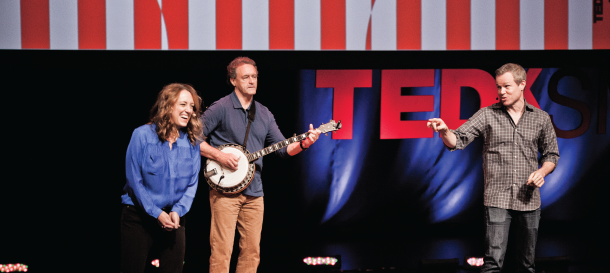
The day started with the two amazing and humorous hosts – Kelly Stoetzel and Rives. Both of them did a great job in running the event and keeping the attention of the audience intact even in the midst of breaks. With over 20 talks throughout the day, some discussed scientific concepts, and some the current affairs of the world. Some made us laugh, and yes, some made us cry, too. To top it all off there was good music added to this great conference.
As an attendee, a few talks completely stood out to me. One of them was given by Jessica Shortall. She discussed the dire need of giving importance to maternity leave, and the effect the current employment system has on child bearing mothers. Backed by statistics, her talk was an eye-opener not just for me but for many others in the audience as her eloquence in speech and sensitivity of the subject matter made it the first standing ovation of TEDxSMU.
As an international student at SMU, I am not new to diversity. Capturing the essence of diversity in the United States and the way it affects the decision making process both economically and socially, the talk delivered by Tracy Brown was as strong as it was humbling. Music by Trevor Douglas raised our spirits and spread an optimistic vibe around. On the flipside, learning about the struggles of cancer faced by Candy Peterson’s daughter and her entire family brought a sense of gratuity for the blessed life that we possess.
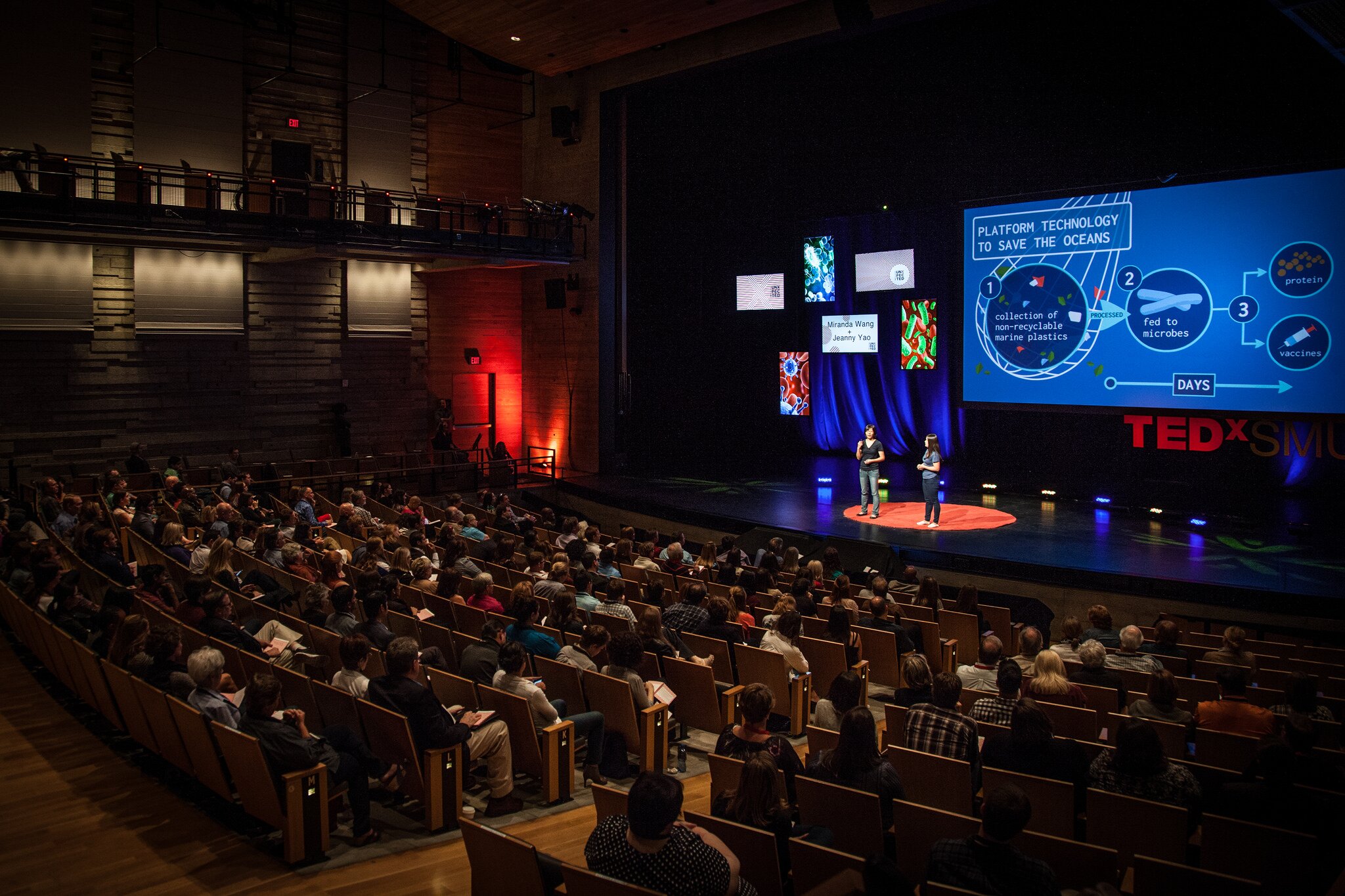
It wasn’t all mature and experienced people; TEDxSMU 2015 had young blood raising the bar high. With Miranda Wang & Jeanny Yao informing us of their breakthrough technology in aquatic life and its nutrition, it was a day packed with knowledge and ideas worth spreading, truly in terms of Technology, Entertainment & Design.
The fight I won with 6 words
By Christopher Lydick on November 30, 2015
TEDxSMU 2015: a day full of inspiring ideas, captivating speakers, and powerful talks focusing on community, meat, and an aesthete’s career path – just to name a few. Each talk drew me in to its unique story; every project earned my full attention, appreciation, and awe.
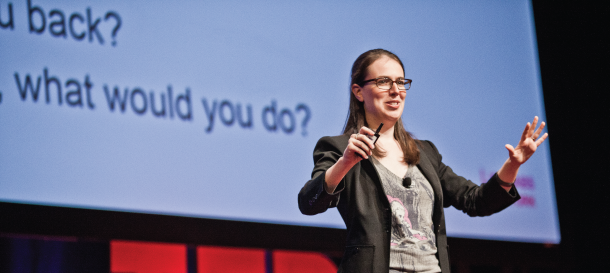
It seemed that with each transition from one talk to the next, the conference was getting better and better – until it was at its end: that’s when Tania Luna stole the conference and emerged as my favorite speaker, my favorite surprisologist, and transformed the performance hall into the most wonderful war zone I’d ever experienced.
In her talk, Tania introduced herself as an 8-year-old girl who just had to be right, who grew up to be an intelligent woman with a drive to be certain and correct. She then challenged her audience not to strive for curiosity – an answer-focused lifestyle – but instead to cultivate wonder; to ask and imagine. Using four tips for would-be wonderers, Tania shared a simple yet transformative how-to and challenged us as a society to eliminate our “certainty habit” and replace it with the “Wonder Habit.”
To demonstrate the power of ‘question agility,’ each attendee was asked to write down a question – a challenge – that he or she would like to ask more often. Very unexpectedly, to close out Tania’s talk and the conference, we were asked to crumple up that question into a ball and get ready to throw it, preparing for an “epic question snowball fight.” We were told that at the end, fate would select for us a question to challenge us for the upcoming week.
The expert surprisologist shouted, “GO,” and the entire conference erupted into a room full of flying wonder and inspiration. Paper and intellect hit attendees in the chest, back, and face, and smiles filled each row. After a few minutes of friendly fire, the room calmed down, and attendees collected their nearest piece of paper ammo, anxious to see what challenge awaited them.
My snowball, my question for the week, was written on a small, rectangular piece of paper in black ink, with only six words and a question mark:
Do you want to hang out?
All of the sudden, I saw in my mind’s eye a picture of me, hanging out with classmates and reconnecting with faded friendships. In that moment, I knew what my challenge was: not to allow my habit of certainty, or my comfort zone, dictate which relationships in which I invest. No, for that week – and for the rest of my life – I would commit to reaching out. I would rebuild burnt bridges, initiate conversations, and bring the distant people I’d once known well back into my life.
You see, Tania’s talk was my favorite not because of what she said, but because of what she did: she asked me to change my habits, to reshape my lifestyle, and to wonder what surprises lay in store from unexpected rekindled friendships.
From TED App to TEDx Attendee
By Kari Strickland on November 23, 2015
I was fortunate enough to attend the TEDxSMU event this fall in the Dallas City Performing Hall. For years I’ve dreamed of attending a TEDx event, and was thrilled to fulfill that dream through a scholarship opportunity.
My interest in TEDx began by listening to recorded talks on the TED app while serving in the Peace Corps in Costa Rica. The town I was stationed in had no Internet access, but once a week I took the bus into town and downloaded as many talks as I could. I listed to these talks throughout the week and on long bus rides to the capital. They served as a way to keep me connected to what was going on in the US as well as a way to inspire me to action in my own work.
What I hadn’t anticipated when I arrived at TEDxSMU was the energy that came from watching the talks live. When I watched videos I was compelled by the speakers’ arguments, but at the event I got swept up in the passion, not only of the speaker, but of the hundreds of people around me who were motivated by a similar passion.
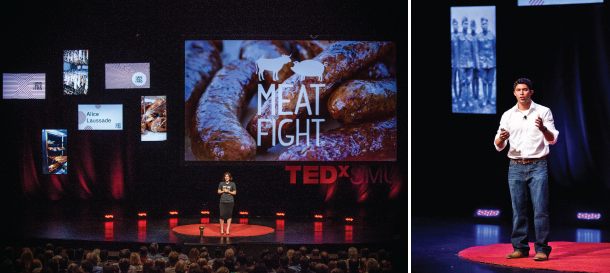
One of the great things about going to a TEDx conference in Dallas was the ability to learn about the amazing work being done in the community. One of the most entertaining speeches of the day was by Alice Laussade who talked about the inspiration behind Meat Fight. This is a huge event that raised $100,000 dollars last year for MS research and has hosted some of the finest chefs in the state as judges (as well as Nick Offerman), but I never knew about it until I heard her talk. Coming from a non-profit background, hearing her speak about the importance of making volunteering fun was something I identified with. She was full of amazing ideas about how to enhance the impact of non-profit fundraising by making it approachable to people, something which I can share with my co-workers who are still in this space.
The other speech that stood out to me that day was by Seth Fairchild. Seth, a member of the Choctaw Nation, spoke on the importance of preserving cultural memories by preserving the stories of the tribe’s elders. He led with a powerful message, “every time an elder dies, a library burns with them”. Passing on history, therefore, is about looking forward. It’s not simply about preserving things that have passed, but giving back to the future by educating kids about their cultural heritage. This talk hit home with me as I thought about my own grandfather working to preserve his story in a book that he recently wrote for our family.
Overall, the experience was incredibly moving and provided lots of inspiration for things I want to learn more about, as well as changes I can make in my daily life. Hearing from these speakers, getting the chance to meet them as well as other participants through the daylong event was an experience that I’ll remember positively for years to come.
How to Give a TEDx Talk
By Nicole Gatmaitan on November 16, 2015
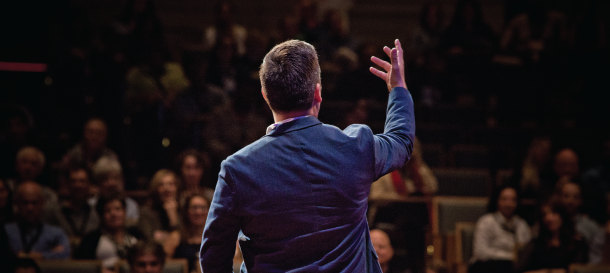
Before TEDxSMU, I’ve only heard about the TED talks and seen a few of them on YouTube. I never really understood what they were. I just knew that they were talks given by inspiring people hoping to inspire others with their innovative ideas or design. I applied on a whim so I didn’t really know what to expect going into the conference. But I’m really glad I was given the opportunity to attend.
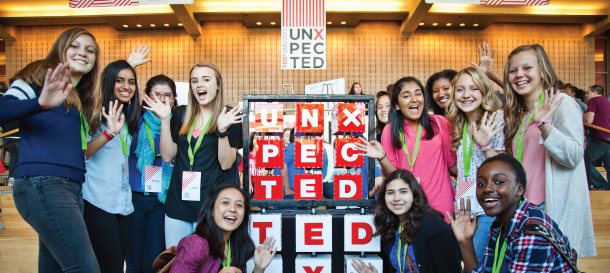
I went with one of my friends who is also a fellow SMU student so I didn’t feel too uncomfortable going by myself. It was my first time at the Dallas City Performance Hall and I was really impressed by the venue. There were a lot of windows so there was a lot of natural light coming into the building so everything seemed bright and exciting. What really impressed me was the giant white poster board cubes with different questions written on them and markers on the floor so people could answer them. Some of the questions were “Who Inspires you,” “If you could ask a TEDx speaker anything, what would it be,” and “Who was your favorite TEDx speaker?” Some of the answers were really clever but the questions made me really think about what I would say. For the “If you could ask a TEDx speaker anything, what would it be” I wrote two questions: “How do you find the courage to give a TED talk?” and “How do you decide what to talk about?”
In regards to speakers, the ones about family were the most impactful for me. I guess it’s because I’m growing up, my parents are getting older and in a few years down the road, I would start my own family. Candy Peterson’s talk about her daughter was diagnosed with melanoma and then she got diagnosed with breast cancer. When she teared up during her talk, I teared up. As the description on the YouTube page says, Mrs. Peterson’s talk was “equal parts witty and equal parts emotional.” I also enjoyed Jessica Shortfall’s talk about paid maternity leave. I knew paid maternity leave was an issue in America, but I never knew how big of an issue it was and Mrs. Shortall’s talk made me aware of that.
After listening to the rest of the talks I already knew the answer to the questions that I had written on the board earlier. To be able to give a TED talk, you find something you’re passionate about or something that you want people to become aware about and more knowledgeable about. If you’re super passionate about it, then you’re able to find the courage to give a TED talk about it.
My Unexpected Transition: From Passive Observer to Active Attendee
By Tania Doblado Speck on November 9, 2015
When I was younger, my father would spend hours watching TED talks. I never understood why he loved it so much until this past summer. In my free time, I found myself eagerly looking up as many TED talk videos as I could, getting inspired by what other people had accomplished. After becoming a loyal fan of the talks, I knew that one day I had to be in the audience of this innovative event. However, I never expected to physically contemplate and listen to more than 20 TED talks in Dallas for free that same year.
Starting at the reception, all the volunteers were very helpful and polite, and throughout the event breakfast, lunch, and snacks were included! In the lobby, I was captivated by the thoughtful questions seen on the big white boards; which encouraged us to write our opinions and ideas, setting a creative atmosphere in the room.
Inside the auditorium, being amidst the speakers was breathtaking. To hear all those amazing humans share their stories, their passions, and their inventions was an experience I’ll never forget. All of them had something unique to share, something unexpected. However, they were all driven by an idea, a thought that had turned into a lifestyle, a project, a challenge, and a change. Some had incredible opportunities, others saw injustice or experienced tragic events, yet all of them had decided to raise their voices and take action. It was inspiring and motivational. I can just imagine the power of having that microphone in hand; your words, what you say, they become solid and they ring through the auditorium. I hope to one day hold that microphone and relay my experiences to a crowd of students to inspire them to change the world, just as I had felt sitting in the audience.
TEDxSMU was a surreal experience for me. I was starstruck to be in the presence of such world changers, something that I hope to do in the future. I’m immensely thankful for this opportunity, and I would highly recommend that every person should experience a TEDxSMU event.
The real return from TEDxSMU
By Kassidy Jacqueline Greiner on November 2, 2015
Going into the TEDxSMU conference, I had the expectation to hear some great speakers, learn some new things, and overall, leave inspired. TEDxSMU did all that, and more. Interestingly enough, the speakers were not the highlight of the day. There was a range of expertise from more amateur student-presenters, to emotional personal life-stories, to more scholarly researchers and skilled policy advocates. Certainly, there were some standout speakers who presented strong research-based arguments AND engaging appeals. In all, the speakers were inspiring—if not to jump on board with their individual platforms, but at the least to promote examination and awareness of our life-shaping choices. The real takeaways were not the speakers’ content, but the unexpected ease of engagement facilitated by the conference, the eye-opening diversity of perspectives, and the underlying charge to participants to wonder.
Over 20 speakers spoke on an array of topics. One of my favorites was Jessica Shortall’s impassioned, well-developed argument for the necessity of paid leave for new parents. Her statistics, coupled with emotional narrative examples, were hard hitting. Additionally, her highlighting the paradoxical image of “working mothers” via stock images versus reality was acute. Another favorite was Jake Minton, a kindergarten teacher/ advocate against gender gap and gender roles. His metaphor to open the doors of “all the important rooms” to his daughter was resonating. Minton also presented strong research to back his poignant and humorous appeal. From a more emotional-method, a standout presenter was Joaquin Zihuatanejo, whose poetry addressing the migrant crisis brought tears to my eyes.
The feats the student presenters had achieved were inspirational in their own right. How awesome to see young people doing such cool things, and moreover- getting up in front of a huge audience and confidently sharing those achievements! From the students who designed a living roof for their school or founded the Catalyst Art Movement, to the charismatic creativity-advocator/ musician Trevor Douglas, to the university student-duo who’s impressive research on aqua-culture will have really important effects: all the student presenters blew me away with their accomplishments, maturity, and courage.
I had anticipated the high caliber of speakers, but one return that I hadn’t expected was the opportunity to not just listen to presentations, but to engage with other attendees. Going alone, I was forced to stop hiding behind my iPhone and address my discomfort with small talk. I found the push to interact, plus the tool of the presentations as a discussion topic, made conversations easy and enjoyable. Not only did I have good and genuine conversations with other participants, but also I found my confidence boosted from the experience. I was not alone in this development. I was super impressed when a solo high school student confidently approached me, shook my hand and introduced herself. TEDxSMU really facilitated this.
A key feature of TEDx talks was summed up by a passing comment of a man I sat next to at lunch. “TED talks are like traveling,” he said. That comparison is so: the TEDx event illuminates different perspectives, cultures, and positions than you encounter in your personal routine. It is like travelling to a whole bunch of places and meeting a whole bunch of new people, in just a day.
The real take-away was not an elevated knowledge from the expert presentations, but rather an inspiring reminder to be awake: to think about things outside your normal routine, to examine norms we accept as truths, to stimulate innovation and creativity, to explore ideas, to wonder!
Inside View of TEDxSMU
By Erin Suddleson on October 28, 2014
Most people’s first experience with TED is simply watching a talk online. I am thrilled to say that mine was as a teen host at TEDxKids@SMU 2012. Before this, I had heard of TEDTalks, but I had no idea that there was a TEDx community just a few minutes away. When a friend told me about TEDxSMU, I immediately did my research and applied to be a teen host. Being a host was such a phenomenal experience. Not only did I get to see TEDx Talks first hand, I had the opportunity to discuss these new ideas with children in the community. In my brief time volunteering I realized how important the TEDx program is for youth, not just for them, but for adults as well. I was so impressed with my group’s creativity and the way they engaged in all of the interactive exhibits. These kids come up with some of the craziest ideas, which is what TED is all about. The sooner they realize that their wildest ideas can become a reality, the sooner they can make their contribution to change the world. I immediately fell in love with this organization and was extremely moved by the talks I heard that day.
This past summer I was fortunate to have had the opportunity to intern with TEDxSMU. I gained first hand experience in public relations and learned the different aspects that are involved in planning a TEDxSMU conference. Most of us just check the website, purchase our ticket, and show up the day of the conference ready to be inspired. But when you attend the conference on November 1st, I want you to take a look around the Dallas City Performance Hall and consider all of the hard work that went on behind the scenes to make this mind-altering experience possible. The TEDxSMU Team puts so much thought into every decision from the conference’s theme to what speakers appear on that stage. (I would add the social media aspect to reiterate your PR experience.)
From my experience as a host and summer intern, the conference is that much more exciting for me as I realized all of the little pieces that need to come together for a successful conference.
This experience not only gave me a greater appreciation for the TEDx speakers, but for the entire TED community. I am motivated by all of the TEDsters, who are so profound in their field, and come together to generate ideas on how to make the world a better place.
I know that no matter where my career takes me, I will always be a part of the TED family.
I hope to see you all on November 1st!
Erin